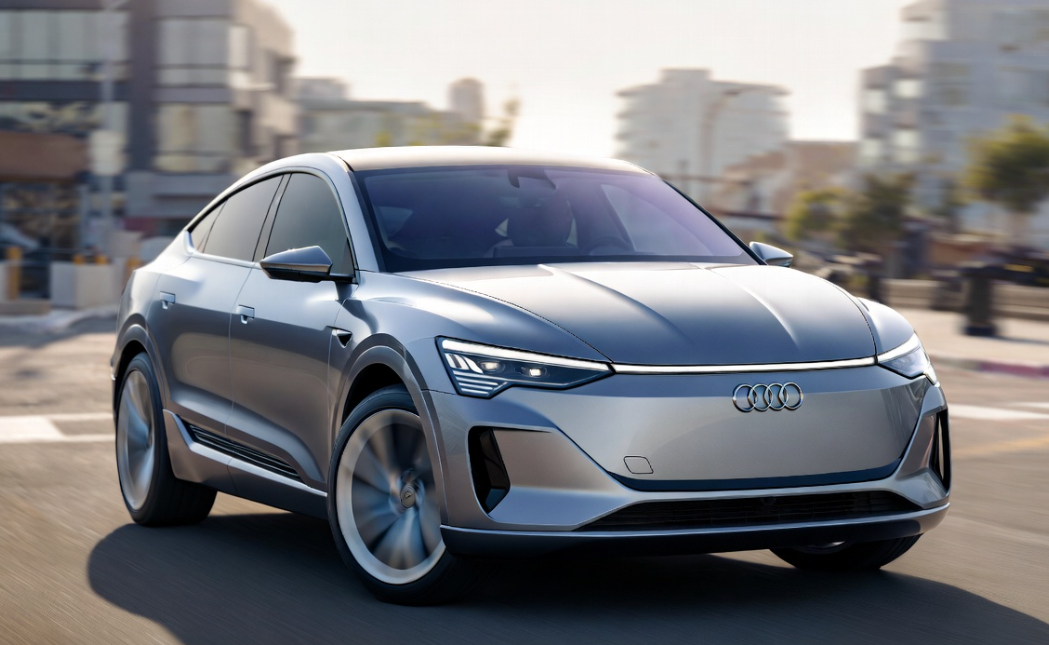
Audi Q8 e-tron 2027 Release Date USA – American buyers looking for Audi’s next flagship electric SUV have a clear timeline emerging: the successor to the discontinued Q8 e-tron is scheduled for production in Mexico starting in 2027. While an official U.S. on-sale date has not been announced, production beginning that year points strongly toward a 2027 or early 2028 model-year arrival for the United States.
Current Status of the Audi Q8 e-tron
The first-generation Audi Q8 e-tron (originally launched as the e-tron) ended production in February 2025 at the Brussels, Belgium plant. The 2025 model year was the final one available in the U.S. market.
In its last form, the dual-motor quattro Q8 e-tron started around $74,800–$76,095 and delivered an EPA-estimated range of roughly 272–296 miles depending on wheels and body style (standard or Sportback). It featured refined luxury, solid performance, and the expected Audi interior quality, but it was based on an older MLB Evo architecture that dated back to the 2019 original.
Sales never reached blockbuster levels, and falling EV demand plus competition from newer models contributed to the decision to discontinue it.
Expected 2027 Release Date for the Successor
Audi has confirmed a direct successor is in development. In early 2024, Audi Board Member for Production Gerd Walker stated: “We will build the Q8 e-tron successor in Mexico from 2027. We have already decided that.”
This remains the most concrete public timeline. Earlier plans under previous leadership had targeted 2026 production in Brussels, but those were revised. As of mid-2026, no official reveal or precise U.S. delivery window has been published, so a late-2027 or 2028 arrival in American showrooms is the realistic expectation.
Production Plans in Mexico
Moving production to Mexico (most likely the San José Chiapa plant, which already builds the Q5) makes strategic sense for the U.S. market. Local assembly improves the chances of qualifying for federal EV tax credits under IRA sourcing rules and shortens supply chains for North American customers.
Audi has invested significantly in the Mexican facility, including battery-related capacity, supporting its broader electrification goals.
What to Expect from the Next-Gen Q8 e-tron?
Details remain limited, but industry reporting and platform logic point to these likely traits:
- Platform: Expected to use (or derive from) the Premium Platform Electric (PPE) architecture shared with the Q6 e-tron and Porsche Macan EV. This should deliver better efficiency, faster charging, and improved range versus the outgoing model.
- Size and positioning: Possibly larger and more upscale than the Q6 e-tron to maintain clear hierarchy as Audi’s flagship electric SUV. Some speculation includes a more spacious cabin or even three-row potential aimed at American and Chinese buyers, though this is unconfirmed.
- Performance and range: Significant gains over the previous 272–296-mile EPA figures are anticipated, along with higher charging power.
- Design: Progressive Audi language with a bold Singleframe grille, advanced lighting, and a refined, tech-forward interior.
Spy photography in past years showed mules resembling the Porsche Macan EV platform, supporting the PPE connection.
Pricing and Availability in the USA
No official pricing has been released. Given the outgoing model’s starting price near $75,000–$76,000 and the Q6 e-tron’s lower positioning, the next Q8 e-tron is expected to start in the mid-to-high $70,000s or low $80,000s before options, destination, and potential tax incentives.
U.S. availability will depend on final production ramp-up and federal/state EV incentives at the time of launch. Buyers interested in the current used/leftover 2024–2025 inventory can still find examples, but new-generation orders will not open until closer to the official reveal.
Why the 2027 Timeline Matters for American Buyers?
The gap between the end of 2025 Q8 e-tron production and the arrival of its successor leaves a temporary hole in Audi’s upper electric SUV lineup. The Q6 e-tron fills the mid-size slot, while the upcoming model is intended to restore the flagship electric presence. Production in Mexico should help with pricing competitiveness and eligibility for U.S. incentives compared with a European-built vehicle.
Until Audi publishes official specifications, pricing, and a firm U.S. on-sale date, the “2027” production start remains the most reliable public benchmark. Prospective buyers should monitor Audi USA announcements, dealer communications, and major automotive outlets for the first official images and details, expected closer to the production launch window.