2027 Slate EV Truck: Price, Specs & Range Guide – The 2027 Slate EV Truck is shaping up to be one of the most significant new vehicles for American buyers seeking affordable electric transportation. Backed by investors including Jeff Bezos and manufactured in the United States, this compact, modular electric pickup from startup Slate Auto aims to undercut traditional trucks and other EVs on price while offering surprising practicality and customization.
With production set to begin in late 2026 at a plant in Warsaw, Indiana, and first deliveries expected in the fourth quarter of that year, the Slate targets everyday U.S. drivers who want a no-frills workhorse or adaptable daily driver without the typical EV premium.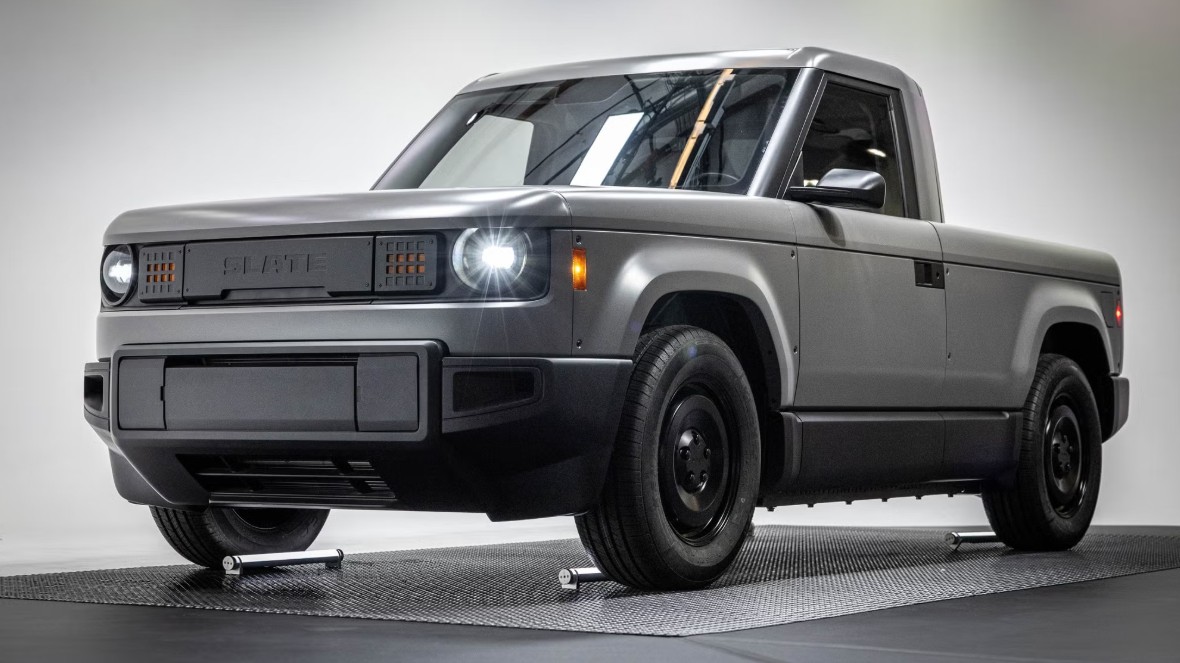
Pricing and Availability for U.S. Buyers
The base “Blank Slate” two-seat pickup starts at $24,950, plus a $1,450 destination charge, for a total of $26,400. This makes it America’s cheapest new pickup and one of the most affordable new EVs available.
SUV configurations raise the price: the Squareback starts around $29,950–$31,400 and the Fastback is higher (roughly $31,950–$33,400 depending on destination). These prices reflect the elimination of the federal EV tax credit.
Slate sells direct to consumers with no traditional dealerships. Preorders require a $300 non-refundable deposit (or $250 for prior reservation holders). The company has reported substantial interest, with earlier reservation numbers in the six figures. Full production capacity is targeted at up to 150,000 units annually.
Design and Features of the Compact EV Pickup
The 2027 Slate Truck measures about 174.6 inches long, 70.6 inches wide, and 68 inches tall, with a 108.9-inch wheelbase—compact enough to be more maneuverable than many midsize trucks while remaining practical for American roads and parking.
It arrives as a single-cab, two-door, two-seat pickup in a standard unpainted gray composite exterior. Standard equipment is deliberately minimal: crank windows, steel 17-inch wheels, a digital gauge cluster, cruise control, power locks, air conditioning, Bluetooth for smartphone pairing (no built-in speakers or large infotainment screen), and a backup camera. Safety features include multiple airbags and electronic stability control, with the company targeting strong crash ratings.
The five-foot bed (60.5 inches long with the tailgate up) and a 7-cubic-foot front trunk (frunk) provide usable cargo space for tools, groceries, or weekend gear.
Performance and Powertrain Specs
Power comes from a single rear-mounted permanent-magnet electric motor producing 181 horsepower and 195 lb-ft of torque. Rear-wheel drive is the only configuration. The company estimates 0–60 mph in about 8.0 seconds and a top speed of 90 mph—adequate for daily driving, merging, and light work rather than performance.
Curb weight is approximately 4,048 pounds for the pickup. Suspension uses MacPherson struts up front and a de Dion axle with coil springs at the rear, contributing to a reasonably composed ride according to early prototype drives.
Range, Battery, and Charging Details
A 65 kWh lithium iron phosphate (LFP) battery (63 kWh usable) delivers an estimated 205 miles of range—up from earlier projections. This single-battery setup prioritizes cost and durability over maximum range options.
Charging uses a NACS port for compatibility with Tesla Superchargers and many public stations. An 11 kW onboard charger supports Level 2 home charging to a full charge in roughly four hours. DC fast charging (up to around 90–120 kW depending on final thermal management) can take the battery from 20% to 80% in about 30 minutes.
Cargo, Towing, and Everyday Practicality
Maximum payload is 1,550 pounds, and towing capacity is rated at 2,000 pounds for the truck configuration (slightly lower for SUVs). The bed volume is about 35 cubic feet. These figures position the Slate as a capable light-duty hauler for landscaping, farm errands, or recreational use rather than heavy commercial towing.
Early impressions from journalists note better-than-expected ride quality and usable acceleration for the price point, making it a viable alternative to compact gas trucks like the Ford Maverick for many U.S. buyers focused on lower operating costs.
Customization Options and Modular Design
Slate’s core philosophy is modularity. Buyers start with the Blank Slate and add what they need—later if preferred. Options include over 100 vinyl wraps (many under $500), more than 200 accessories (most under $500), roof racks, stereo systems, seat covers, and conversion kits that turn the pickup into a five-seat Squareback or Fastback SUV by adding a rear bench and enclosure.
The company emphasizes DIY-friendly design with accessible parts and free manuals (“Slate University” videos), appealing to owners who want to maintain or modify the vehicle themselves.
Production Timeline and U.S. Manufacturing
Assembly occurs at Slate’s facility in Warsaw, Indiana. Production is scheduled to start in the fourth quarter of 2026 for the 2027 model year, with deliveries beginning late that year and ramping through 2027. The company has raised over $1 billion and aims for profitability relatively quickly by focusing on simplified manufacturing and a lean cost structure.
Who Should Consider the 2027 Slate EV Truck?
This truck suits budget-conscious American buyers, urban or suburban drivers needing light hauling, first-time EV owners, small business fleets, or anyone who values simplicity and the ability to customize over luxury features. It is less ideal for those requiring long-range highway capability, all-wheel drive, or high towing capacity.
Compared with the Ford Maverick or other compact trucks and entry-level EVs, the Slate stands out for its electric efficiency, low purchase price, and U.S. production. Real-world range, reliability, and residual values will become clearer once deliveries begin and independent testing is available.
For the latest details, check Slate’s official site for preorders and configuration tools. The 2027 Slate EV Truck represents a bold bet on accessible electric mobility tailored to everyday American needs.