2027 Hyundai Nexo Release Date: Latest Updates – There is no confirmed distinct “2027 Hyundai Nexo.” The all-new second-generation Nexo is the 2026 model year vehicle. It launched in South Korea in mid-2025, reached global markets (including Europe) in early-to-mid 2026, and U.S. availability remains limited or unconfirmed beyond possible California sales. Any 2027 references typically relate to continued sales, potential updates, or delayed U.S. consumer rollout.
2027 Hyundai Nexo Release Date Overview
Hyundai unveiled the second-generation Nexo (model code NH2) at the Seoul Mobility Show in April 2025. It went on sale in South Korea in June 2025 and began global rollout in early 2026. Official materials confirm an early-2026 global launch window, with European availability following shortly after (orders open in markets such as Spain by mid-2026).
For U.S. buyers, timing is less clear. The previous Nexo was California-only (roughly 2019–2023 model years). Multiple automotive outlets report that full U.S. consumer availability for the new model is unconfirmed as of mid-2026, though some sources anticipate limited California sales and note Hyundai’s ongoing hydrogen efforts in the U.S. (including fleet and research partnerships). No official 2027 redesign or major facelift has been announced; the current generation is expected to continue.
Expected Features and Specs of the Next-Generation Nexo
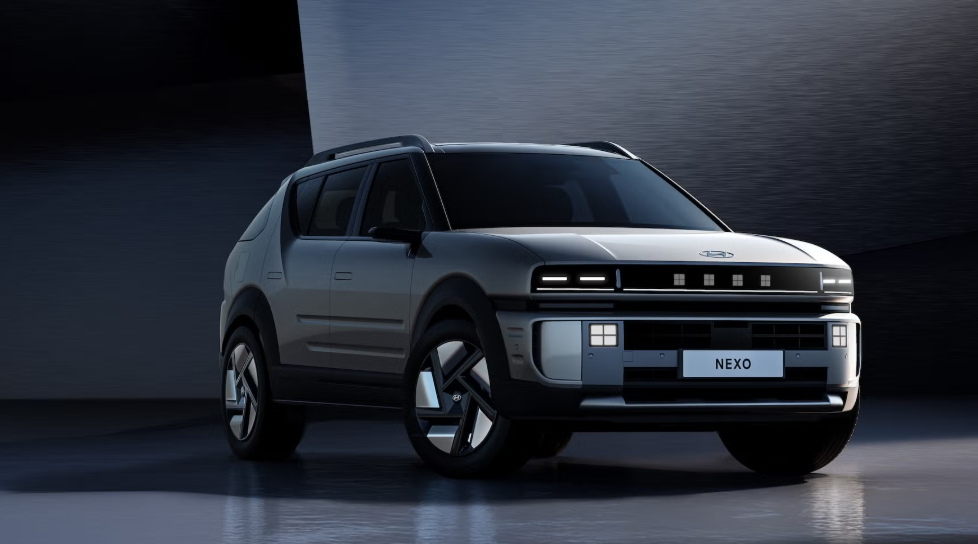
The redesigned Nexo adopts Hyundai’s “Art of Steel” design language (previewed by the Initium concept). It features a more boxy, retro-futuristic SUV look with distinctive HTWO lighting elements referencing hydrogen.
Key powertrain and performance upgrades include:
- Total system output of approximately 190 kW (about 201–255 hp depending on measurement), with a 150 kW electric motor.
- Larger high-voltage buffer battery (2.64 kWh).
- Increased hydrogen storage (up to 6.69 kg).
- Claimed range of up to 826 km (about 513 miles) on the WLTP cycle or roughly 435–447 miles on Korean test cycles.
- 0–62 mph (0–100 km/h) in 7.8 seconds.
- Refueling in about five minutes.
- Front-wheel drive; European models gain towing capability (up to ~1,000 kg / 2,200 lb).
Dimensions grew slightly (roughly 187 inches long, 73.4 inches wide, 64.6–65.9 inches tall, 109.8-inch wheelbase). Cargo volume reaches about 35 cubic feet behind the second row and up to 61 cubic feet with seats folded. The interior gains dual large displays, advanced driver-assistance systems, sustainable materials, and improved comfort features such as relaxation seats.
US Availability, Pricing, and Market Realities
U.S. pricing has not been officially confirmed by Hyundai in most major reports. Estimates place the starting MSRP in the mid-to-high $50,000s to low $60,000s range (prior generation started above $60,000). California incentives, potential free-fuel programs, and discounts could lower effective cost significantly for qualifying buyers, as they did with the first generation.
Availability is the larger barrier. Hydrogen refueling stations remain concentrated almost exclusively in California. Outside that state, practical ownership is extremely limited. Some coverage suggests the new Nexo may return to California in limited numbers or primarily as a fleet/research vehicle; others indicate Hyundai is focusing consumer efforts on markets with stronger hydrogen support (South Korea, parts of Europe).
Hydrogen Infrastructure Challenges in the USA
Even with strong range and five-minute refueling, the Nexo’s viability depends on a reliable hydrogen network. Public stations in the U.S. are sparse and mostly California-based. Expansion continues slowly through public-private efforts, but coverage remains a major constraint compared with the growing battery-EV charging network. Hyundai continues long-term investment in hydrogen (including commercial vehicles and production partnerships), yet passenger-vehicle adoption stays niche.
What U.S. Buyers Should Watch Next?
Monitor official Hyundai USA announcements, California Air Resources Board incentive updates, and hydrogen station maps (e.g., Alternative Fuels Data Center). If you are in California and prioritize long range plus rapid refueling over widespread infrastructure, the second-generation Nexo represents a meaningful step forward in fuel-cell technology. For most of the country, battery-electric SUVs remain the more practical zero-emission choice in 2026–2027.