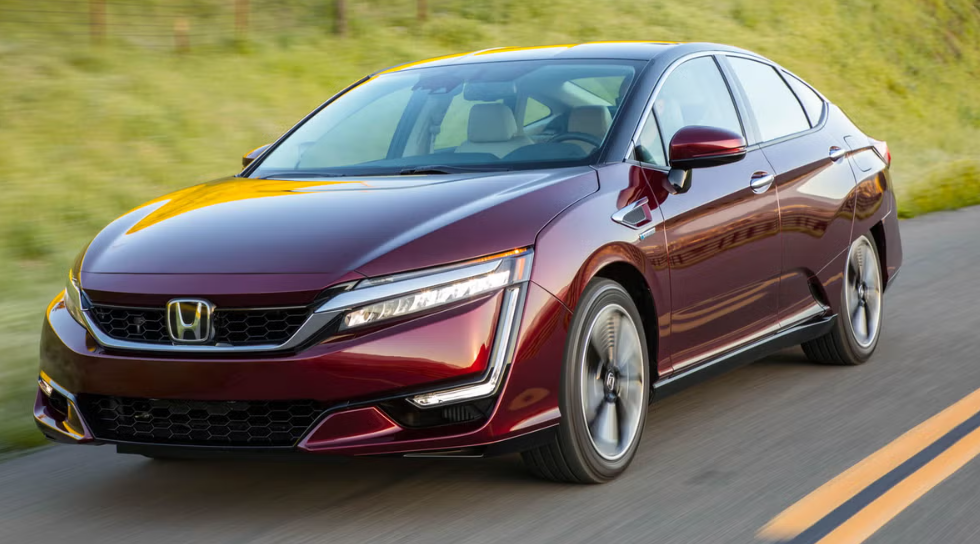
2027 Honda Clarity Release Date: Latest Updates – There is no confirmed 2027 Honda Clarity release date because Honda has not announced any plans to revive the nameplate. The Honda Clarity lineup (Fuel Cell, Plug-In Hybrid, and Electric variants) ended production in August 2021, with fuel-cell leases continuing into 2022. As of mid-2026, trusted sources including Wikipedia, Honda statements, and automotive outlets report no successor or return under the Clarity badge for the U.S. market.
Current Status of the Honda Clarity
Honda produced the second-generation Clarity (2016–2021) as a midsize sedan platform offering three powertrains: a hydrogen fuel-cell electric vehicle (FCEV) available mainly via lease in California, a plug-in hybrid (PHEV) sold nationwide, and a short-lived battery-electric version limited to California and Oregon. U.S. sales peaked around 20,000 units in 2018 before declining sharply. Honda cited strategy shifts toward broader electrification (initially targeting battery EVs and FCEVs) and low demand when ending production at its Sayama plant.
No official Honda roadmap, press release, or major industry report (Car and Driver, MotorTrend, Cars.com, etc.) mentions a 2027 Clarity or any direct replacement sedan under that name. Sources explicitly note it is unlikely to return soon.
Why No 2027 Clarity Is Expected?
Honda’s recent strategy prioritizes next-generation hybrids and selective zero-emission efforts rather than reviving niche models like the Clarity. Key points from 2025–2026 updates:
- Starting in 2027, Honda plans to launch models with an all-new hybrid system and next-generation platform. The company targets 15 new hybrid models globally (primarily North America) by fiscal 2030, including midsize and larger vehicles. Prototypes such as a Honda Hybrid Sedan have been shown, but none carry the Clarity name.
- Battery-electric plans (including the 0 Series SUV and sedan originally eyed for the mid-to-late 2020s) were scaled back or canceled for the U.S. market. The Prologue EV is ending after the 2026 model year, leaving Honda without mainstream BEVs in the U.S. once inventory clears.
- Hydrogen efforts continue on a limited scale. The CR-V e:FCEV (a plug-in fuel-cell crossover, America’s only production FCEV of its type) launched in California in 2024/2025 via lease. However, Honda is ending joint production of the current fuel-cell system with GM by the end of 2026 and shifting to its own next-generation modules (mass production targeted around 2027 for broader applications). CR-V e:FCEV production is expected to wind down once remaining systems are used.
The Clarity’s unique rear-wheel skirts and dedicated platform are not carried forward in current plans. Honda emphasizes cost-reduced, higher-volume hybrids with improved efficiency (targeting >10% better fuel economy and significant system cost cuts) and driving dynamics for mainstream models such as next-gen Civic, Accord, CR-V, and larger vehicles.
What U.S. Buyers Can Expect Instead in 2027 and Beyond?
Honda’s North American focus for the late 2020s centers on hybrids:
- Next-generation hybrid system and platforms arriving from 2027 onward.
- Expanded hybrid offerings across compact to large vehicles (including potential Pilot, Odyssey, and Ridgeline applications with a new hybrid V-6 setup later in the decade).
- Continued support for existing Clarity owners (parts, service, warranty) as previously stated.
- Limited residual hydrogen activity via the CR-V e:FCEV while available in California, plus longer-term independent fuel-cell module development for vehicles, commercial uses, and stationary power.
Buyers interested in Honda electrified vehicles should watch official Honda announcements, the company’s hybrid prototype reveals, and updates on next-gen platforms rather than expecting a Clarity revival. Used Clarity PHEVs remain available on the secondary market and offered solid electric range (around 47 miles) plus overall efficiency when new.