2027 Honda 0 Series Saloon Release Date Update – The Honda 0 Series Saloon (often called the Honda 0 Saloon) was a radical all-electric sedan concept and prototype from Honda’s dedicated “0 Series” EV lineup. First shown as a concept at CES 2024 and refined as a near-production prototype at CES 2025, it featured a dramatic low, wedge-shaped aerodynamic body, thin battery packaging under the “Thin, Light, and Wise” design philosophy, advanced software (ASIMO OS), and plans for Level 2+/eyes-off capability.
It was positioned as a flagship EV sedan aimed primarily at the North American market, with production planned at Honda’s EV Hub in Ohio (Marysville area). Expected pricing was in the premium range, around the mid-$40,000s to $50,000 start, competing with vehicles like the Tesla Model S or other high-tech EVs.
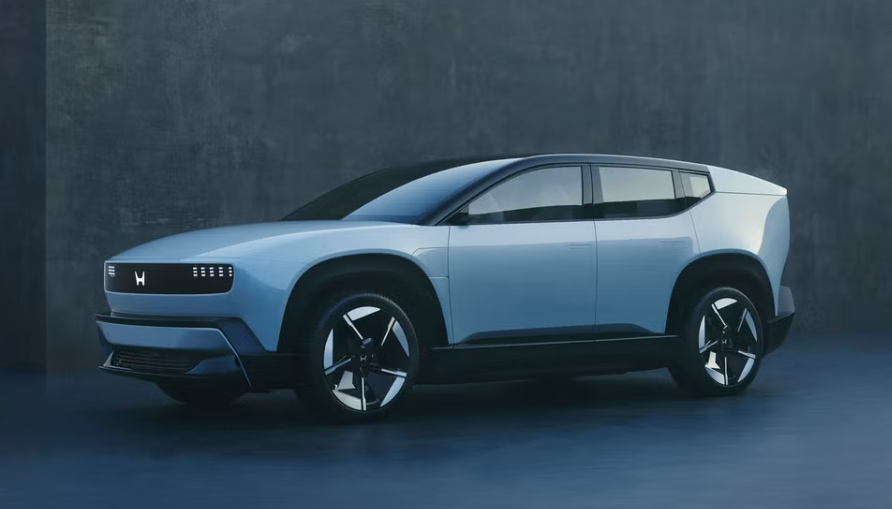
Original Release Timeline for the USA
Honda originally targeted a 2026 launch for the first 0 Series models in North America. The 0 SUV was slated for the first half of 2026, with the Saloon following later in 2026 (or as a 2027 model year vehicle). Both were to be built in the United States.
In January 2026, Honda confirmed a delay specifically for the Saloon, pushing it into 2027 while keeping the Acura RSX and 0 Series SUV on track for 2026. The delay was linked to regulatory changes, tariffs, and the rollback of U.S. EV tax credits.
Why the 2027 Release Was Canceled?
In March 2026, Honda fully canceled development and production of the Honda 0 Series Saloon, the 0 Series SUV, and the related Acura RSX. All three were planned as U.S.-built vehicles on the new Zero platform.
Honda cited a combination of factors:
- Significant slowdown in U.S. EV demand
- Changes in U.S. tariff policies and the volatile policy environment around EV incentives and regulations
- Competitive pressure, especially from newer EV makers
- The company’s challenging financial situation, leading to expected large write-downs (reported in the range of roughly $15–16 billion across fiscal years)
Honda stated that launching the models in the then-current business environment would likely result in further long-term losses. This marked a major strategic pivot away from the aggressive 0 Series EV rollout for North America.
As of mid-2026, Wikipedia and multiple automotive outlets list the Honda 0 Saloon as cancelled, with no production or U.S. sales planned.
Current Status for U.S. Buyers (as of July 2026)
There is no 2027 Honda 0 Series Saloon coming to the United States. Honda has also discontinued its existing U.S. EV (the GM-based Prologue) after the 2026 model year, leaving the brand without a pure battery-electric vehicle offering in the American market for the near term.
Honda is instead accelerating its hybrid strategy. The company plans to launch 15 new hybrid models globally by around 2030 (with a strong North American focus), starting with vehicles featuring an all-new hybrid system and platform from 2027 onward. A Honda Hybrid Sedan Prototype revealed in May 2026 shows a more practical fastback design that draws some styling influence from the canceled 0 Series while previewing future midsize sedans (likely related to the next Accord generation or similar). These hybrids aim for improved efficiency (over 10% better fuel economy) and lower system costs (around 30%).
A smaller 0 Series model (0 α / Alpha) continues development for markets such as Japan and India, but it is not intended for the U.S. in the same form.
What This Means for American Shoppers?
If you were waiting for the futuristic 0 Series Saloon as a 2027 model:
- It will not arrive.
- Honda’s focus has shifted heavily to hybrids for the U.S. market in the late 2020s.
- Watch for the new hybrid sedan and other electrified models expected from 2027–2029.
- Existing Honda and Acura hybrids (Accord, CR-V, Civic, etc.) remain the primary electrified options in the near term.
For the latest official updates, check Honda’s U.S. newsroom or authorized dealers, as product plans can evolve with market conditions. The cancellation reflects broader industry challenges with EV demand and policy in the United States rather than a complete abandonment of electrification.