2027 Audi RS3 Release Date & Updates for USA – The 2027 Audi RS3 continues the current generation of Audi’s high-performance compact sedan in the United States, with a mid-cycle interior update rather than a full redesign. While stricter Euro 7 emissions rules end RS3 production and sales in Europe by mid-2027, Audi has confirmed the model and its iconic 2.5-liter turbocharged five-cylinder engine will remain available in non-European markets, including the US.
US buyers can expect the updated 2027 RS3 at dealerships following European order openings in late 2026, with availability aligning with typical Audi model-year timing. The car retains its core appeal: a distinctive five-cylinder soundtrack, strong performance, and playful rear-biased quattro all-wheel drive.
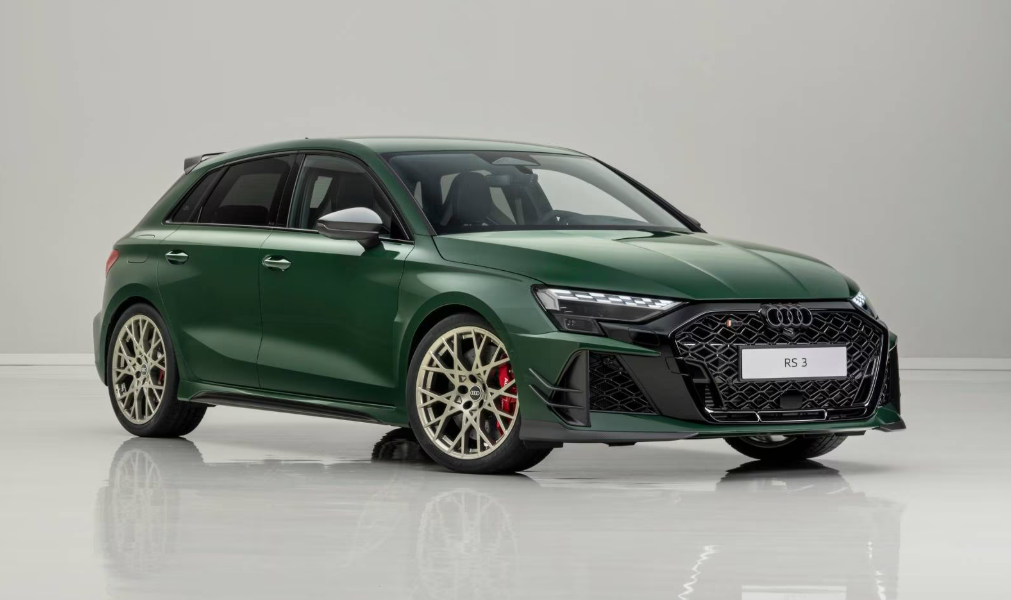
What’s New for the 2027 Audi RS3?
The primary changes for 2027 focus on the cabin. Audi transplants elements from newer models such as the Q3, replacing the prior 12.3-inch digital instrument cluster and 10.1-inch touchscreen with a larger dual-display setup: an approximately 11.8- or 11.9-inch virtual cockpit digital gauge cluster and a 12.8- or 12.9-inch infotainment touchscreen.
Physical buttons are reduced, with climate controls moving into the touchscreen interface. The steering wheel gains updates (rotary dials replacing some touch-sensitive controls on the RS3), and adaptive cruise control receives vehicle-to-vehicle communication improvements for better following-distance and speed management. Exterior changes are minor, limited mainly to revised daytime-running light signatures. Powertrain, chassis, and core performance remain unchanged.
2027 Audi RS3 Engine, Performance, and Specs
Under the hood sits the same turbocharged 2.5-liter inline-five producing 394 horsepower and about 369 lb-ft of torque. It pairs with a seven-speed dual-clutch automatic and standard quattro all-wheel drive featuring a torque-vectoring rear differential and RS Torque Rear mode for controlled drifts.
Car and Driver testing of recent RS3 models recorded 0-60 mph in as little as 3.2 seconds. Top speed reaches up to 180 mph with the appropriate package. EPA estimates remain around 20 mpg city / 29 mpg highway / 23 mpg combined. The sedan body style (the only one offered in the US) provides compact dimensions with limited rear-seat and trunk space.
Audi RS3 Competition Limited Special Edition
To mark 50 years of Audi’s five-cylinder engines, the brand offers the RS3 Competition Limited for 2027 (deliveries began mid-2026 in Europe). Limited to 750 units worldwide, it adds adjustable coilover suspension, a stiffer rear stabilizer, carbon-fiber aero elements, unique Neodymium gold wheels, special interior trim with a numbered plaque, and other enhancements while retaining the same 394-hp engine.
Audi of America has confirmed US availability of the sedan version. Pricing is expected to be substantially higher than the standard model (European figures convert to roughly $115,000–$120,000+ range before adjustments).
Expected Pricing and Availability in the USA
Recent model years start in the mid-$60,000s to low-$70,000s MSRP range (plus destination), with loaded examples climbing higher. Exact 2027 pricing has not been fully detailed in all sources at the time of writing, but expect modest increases consistent with equipment updates. The standard RS3 remains the more attainable choice for most buyers, while the Competition Limited targets collectors.
Because the five-cylinder continues for North America after Europe’s cutoff, US availability should extend at least through the remainder of the current A3-platform lifecycle (potentially into 2028 or beyond, depending on the next-generation timeline).
Why the RS3 Matters for American Enthusiasts?
In a market increasingly filled with four-cylinder performance cars and electrified options, the RS3’s unique engine note, sharp handling, and compact footprint make it a standout. The 2027 updates modernize the interior without diluting the driving experience. For buyers seeking the last pure expression of Audi’s five-cylinder character in the US, the 2027 model year represents a key window before any future hybrid or next-generation shift.