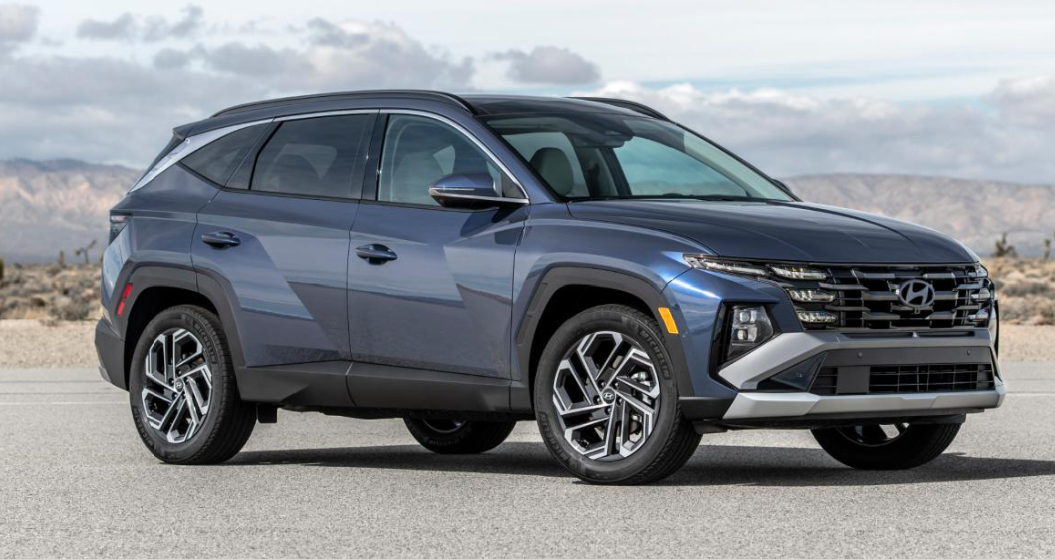
2027 Hyundai Tucson Fuel Cell Release Date News – Hyundai’s original Tucson Fuel Cell made history as one of the first mass-produced hydrogen vehicles available to U.S. customers. Many drivers still search for updates on a possible “2027 Hyundai Tucson Fuel Cell.” Here’s the current status based on official announcements, spy reports, and trusted automotive sources as of mid-2026.
History of the Hyundai Tucson Fuel Cell
Hyundai introduced the Tucson Fuel Cell (also known as the ix35 FCEV in some markets) as its first production hydrogen fuel-cell electric vehicle (FCEV). It entered limited production around 2013–2014 and became the first mass-produced, federally certified hydrogen vehicle offered for lease in the United States, primarily in California where hydrogen stations were concentrated.
The Tucson Fuel Cell used a hydrogen fuel-cell stack to generate electricity, producing only water vapor as a byproduct. It offered a practical range for its time and helped Hyundai accumulate significant real-world zero-emission miles. Hyundai later replaced it with the dedicated Nexo FCEV, which launched for the 2019 model year and was purpose-built around fuel-cell technology rather than adapted from a conventional SUV platform.
Is There a 2027 Hyundai Tucson Fuel Cell?
No official confirmation exists of a 2027 Hyundai Tucson Fuel Cell model. Searches of Hyundai’s U.S. site, recent product announcements, and major automotive publications turn up no plans for a fuel-cell version of the next-generation Tucson.
Hyundai’s passenger-vehicle hydrogen strategy centers on the Nexo nameplate. The second-generation Nexo (previewed by the INITIUM concept in late 2024 and revealed in production form in 2025) serves as the company’s current and near-term FCEV offering. It is not badged as a Tucson.
The next-generation Tucson itself is expected as a 2027 model-year vehicle, but available information points to conventional gasoline, hybrid, and plug-in hybrid powertrains—not a fuel-cell option.
The 2026 Hyundai Nexo: Current Fuel Cell Offering
The all-new Nexo (often referred to as the 2026 model in global markets) uses Hyundai’s third-generation fuel-cell stack. It delivers improved power (around 201 hp in tested examples), greater efficiency, longer range (claims exceeding 400–500 miles depending on market and testing), and faster refueling typical of hydrogen vehicles (roughly five minutes).
Hyundai has confirmed global availability beginning in late 2025/early 2026 in select markets. U.S. retail or fleet availability remains under evaluation, with limited infrastructure still a key factor. California continues to host the majority of public hydrogen stations in the United States, and Hyundai has historically focused FCEV sales and leases there.
The Nexo features Hyundai’s newer “Art of Steel” design language, advanced safety systems, and vehicle-to-load capability in some versions—technology evolved from earlier FCEV efforts that began with the Tucson Fuel Cell.
Expected 2027 Hyundai Tucson Release and Features
The next-generation Hyundai Tucson (internally referenced in some reports as NX5) has been spied testing in heavily camouflaged form in multiple regions, including the United States. Industry expectations point to a global reveal in the second half of 2026 and U.S. arrival as a 2027 model year vehicle, with dealer deliveries likely beginning in late 2026 or early 2027.
Projected pricing for the base model is expected to start in the low-to-mid $30,000 range, consistent with the current Tucson’s positioning against competitors such as the Toyota RAV4 and Honda CR-V. Powertrain options are anticipated to include efficient gasoline engines, a strong hybrid system, and a plug-in hybrid variant offering meaningful electric-only range. No credible reports currently list a fuel-cell powertrain for this generation.
Design cues from spy photos and early renders suggest a boxier, more rugged stance than the current model, with updated lighting, a modern interior featuring large displays, and the latest Hyundai safety and connectivity suite.
Hydrogen Infrastructure in the USA
Hydrogen refueling remains limited primarily to California, with a smaller number of stations in other states. This geographic concentration has historically restricted FCEV sales volumes for both the original Tucson Fuel Cell and the first-generation Nexo. Hyundai continues to support the technology through its HTWO hydrogen business unit and ongoing station partnerships, but widespread national availability is still years away.
U.S. buyers interested in zero-emission SUVs currently have more immediate options in Hyundai’s battery-electric IONIQ lineup and the efficient Tucson Hybrid and Plug-in Hybrid models.
What to Expect for Future Fuel Cell Models?
Hyundai remains committed to hydrogen technology for both passenger and commercial vehicles (including the XCIENT Fuel Cell truck). The INITIUM concept and subsequent second-generation Nexo demonstrate continued investment in third-generation stacks with higher power density, durability, and range. Future FCEVs may expand beyond the Nexo nameplate, but no official timeline or confirmation links a fuel-cell system to the Tucson platform for 2027.
Prospective buyers should monitor Hyundai USA announcements and California hydrogen network expansions for the latest on Nexo availability. For conventional and hybrid Tucson shoppers, the 2027 redesign is the model to watch, with official details expected later in 2026.
In summary, there is no announced 2027 Hyundai Tucson Fuel Cell. The original Tucson Fuel Cell’s legacy lives on in the dedicated Nexo FCEV, while the next Tucson focuses on popular hybrid and gasoline powertrains suited to broader U.S. infrastructure. Check official Hyundai sources and trusted automotive outlets for updates as the 2027 model year approaches.