2027 Mercedes eSprinter Release Date USA Guide – The next-generation Mercedes-Benz eSprinter (the electric version of the fourth-generation Sprinter) is expected to reach the US market in 2027, likely as a 2028 model year vehicle. Official details remain limited as Mercedes has only teased the design and technology, but reports from trusted automotive sources consistently point to this timeline for North America.
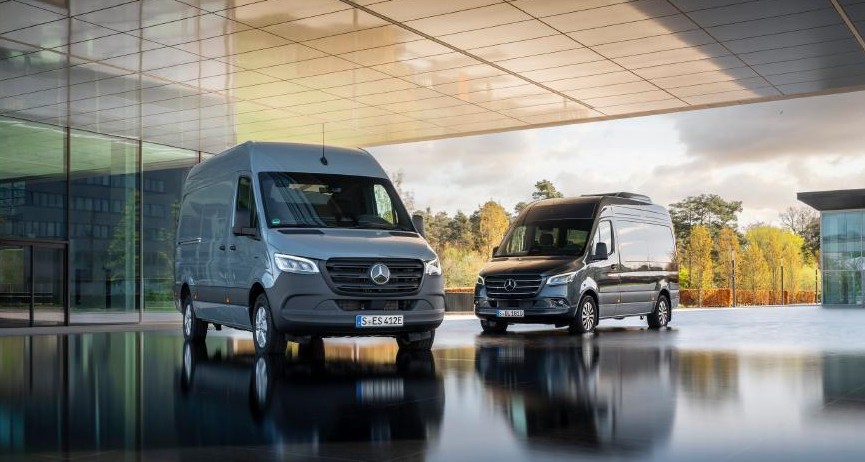
Expected 2027 Mercedes-Benz eSprinter Release Date in the USA
Mercedes-Benz plans an official reveal of the fourth-generation Sprinter around mid-2026, with European sales starting toward the end of 2026. For the United States and broader North American market, arrival is anticipated sometime in 2027 (as a 2028 model in many cases).
The electric commercial variants (eSprinter) follow the related passenger-oriented VLE model, which begins production and European sales in 2026 and reaches US shores in 2027. Commercial panel vans and chassis versions on the new architecture are expected shortly afterward.
Earlier projections from 2023 had suggested delays into 2028, but more recent 2025 reporting from outlets covering Mercedes Vans events has shifted the window earlier—to late 2026 in Europe and 2027 for the US. Exact US order books and dealership availability will depend on production ramp-up at facilities including the North Charleston, South Carolina plant that already builds the current eSprinter.
Current eSprinter vs. the Upcoming Next-Generation Model
The current Mercedes-Benz eSprinter, available in the US since 2024 (with 2025 updates), is a battery-electric adaptation of the third-generation Sprinter. It offers 81 kWh or 113 kWh usable LFP batteries, rear-wheel drive, up to roughly 150–206 miles of EPA-estimated range (higher on optimistic WLTP figures), and cargo capacity matching diesel counterparts in key configurations. Pricing has started in the low-to-mid $70,000s depending on battery and power output.
The 2027/2028 next-gen eSprinter will be a clean-sheet design on purpose-built platforms rather than a conversion. It prioritizes greater efficiency, faster charging, software-defined features, and modular body styles while retaining the commercial focus that has made the Sprinter a US fleet favorite for deliveries, trades, emergency services, and conversions.
Platforms Powering the Next eSprinter: VAN.EA and VAN.CA
Mercedes is introducing two closely related architectures that share approximately 70% of components:
- VAN.EA (Van Electric Architecture) — dedicated to fully electric models, featuring an 800-volt electrical system for significantly faster DC charging.
- VAN.CA (Van Combustion Architecture) — for diesel or other internal-combustion versions, ensuring customers who are not yet ready for full electrification still have options.
These platforms underpin both commercial Sprinter/eSprinter variants and the more passenger-focused VLE and VLS “grand limousines.” Early testing of VAN.EA vehicles has demonstrated strong real-world range potential and rapid recharging (examples include long trips completed with only brief stops).
Expected Key Features and Technology
Mercedes has highlighted several advancements for the next Sprinter generation:
- Software and connectivity — Full integration of MB.OS (Mercedes-Benz Operating System), enabling over-the-air updates, AI-assisted optimization of routes/charging/maintenance, cloud connectivity, and open support for third-party fleet-management or industry-specific apps.
- Charging and efficiency — 800-volt architecture for much quicker top-ups compared with the current eSprinter’s roughly 115 kW peak.
- Design and practicality — Teaser “Boulder” sculpture and previews show a longer, less-sloped hood, wider front end, and stronger Mercedes family resemblance while preserving the boxy, highly configurable cargo space, multiple wheelbases, roof heights, and body styles (panel van, chassis cab, etc.).
- Versatility — Continued emphasis on conversions for refrigerated, workshop, emergency, and leisure uses, plus improved uptime tools aimed at commercial operators.
Exact battery sizes, horsepower figures, EPA range estimates, payload numbers, and US pricing have not been released. Improvements over the current model’s range and efficiency are widely expected.
What the 2027 eSprinter Means for US Buyers and Fleets?
US fleet operators, last-mile delivery companies, and commercial users currently choosing between the diesel Sprinter and the existing eSprinter will gain a purpose-built electric option with modern software and faster charging. Production continuity at the South Carolina plant should support domestic supply. Buyers who prefer combustion power will still have VAN.CA versions available during the transition.
The current eSprinter remains a strong, available choice in the meantime, with ongoing model-year updates. Prospective buyers interested in the next generation should monitor official Mercedes-Benz Vans announcements for the mid-2026 reveal and subsequent US specification and pricing details.
In summary, while no firm “on-sale” calendar date has been locked in by Mercedes-Benz USA, the consensus from recent industry reporting places the next-generation eSprinter’s arrival in the American market during 2027. Stay tuned to official channels for confirmation as the 2026 reveal approaches.